Simplification is one of the most scoring topics in the Quant section of banking exams. In the beginning, I used to feel that this topic was boring and completely calculation-based. My speed was very slow, and I used to take a lot of time even on simple questions. But during my preparation, I realised that if the basics are clear, simplification can actually become one of the easiest and quickest topics to score marks.
What Simplification Means in Banking Exams
Simplification questions are mainly about solving basic mathematical expressions that include numbers, brackets, percentages, fractions, and roots. These questions are not meant to be tricky, but they test how comfortable you are with calculations under time pressure. Once I understood this, I stopped overthinking these questions and focused more on accuracy.
Why Simplification Is Very Important in Clerical Exams
One thing I clearly noticed during my preparation is that simplification carries heavy weight, especially in clerical-level exams. In exams like SBI Clerk and IBPS Clerk, around 9 to 10 questions are usually asked from simplification alone. If you are good at this topic, you can solve these questions quickly and save a lot of time. This extra time becomes very useful for tougher questions like arithmetic or DI, where more thinking is required.
Importance of the BODMAS Rule
In my initial days, I made many mistakes because I did not properly follow the BODMAS rule. I used to solve questions randomly, which often led to wrong answers. Later, when I consciously started applying the BODMAS rule step by step, my calculation errors reduced a lot. Following the correct order of operations brought clarity and confidence while solving questions.
My Initial Struggle with Speed
When I started practicing simplification, my speed was very slow. Even after knowing the method, I used to spend too much time on calculations. Instead of getting demotivated, I decided to work on my basics. I focused on improving my calculation skills slowly and consistently rather than rushing for speed.
How Learning Fractions, Squares, and Cubes Helped Me
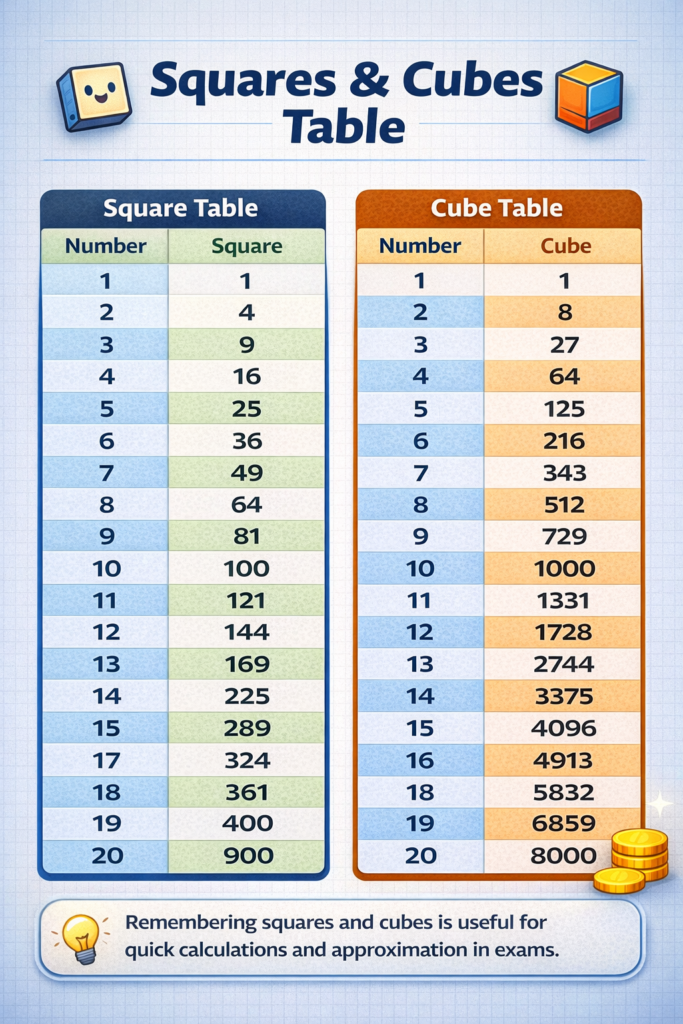
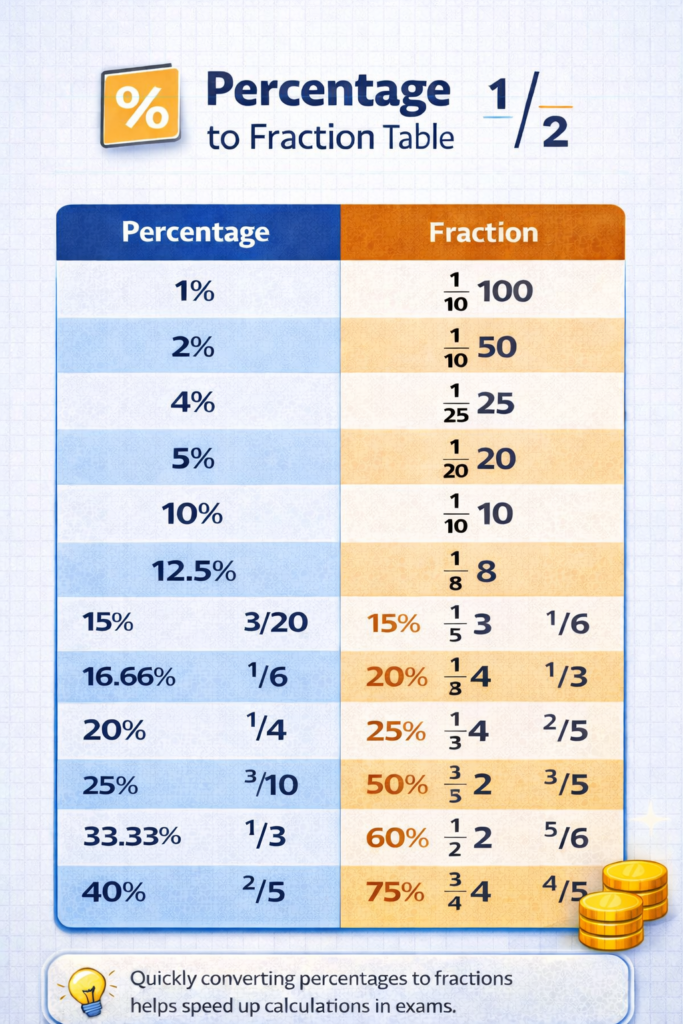
One major improvement came when I started revising fractions, squares, and cubes regularly. Remembering common squares and cubes helped me solve root-based questions quickly. Understanding fraction values made percentage and division questions easier. Once these basics became familiar, I noticed that simplification questions started taking much less time than before.
Types of Simplification Questions I Practiced
During my preparation, I practiced different types of simplification questions, such as:
- Expressions with brackets
- Percentage-based calculations
- Fraction and decimal questions
- Square root and cube root questions
- Approximation-based questions
Practicing all types helped me stay comfortable with different question patterns.
Common Mistakes I Made Initially
Looking back, there were a few mistakes that slowed my progress:
- Ignoring the BODMAS rule
- Trying to solve too fast and making silly mistakes
- Avoiding revision of basic calculations
- Spending too much time on a single question
Once I became aware of these mistakes, it became easier to correct them.
How I Practiced Simplification
I did not solve hundreds of questions daily. Instead, I focused on solving a small number of questions regularly. Practicing 10–15 questions every day helped me improve consistency. Whenever I got a question wrong, I tried to understand the mistake instead of just checking the answer. Over time, both my speed and accuracy improved.
Final Thoughts
Simplification may look simple, but it plays a very important role in banking exams. My journey with this topic taught me that slow progress is still progress. By working on basics like fractions, squares, and cubes, and by practicing regularly, simplification became much easier for me. Especially in clerical exams, being strong in this topic can save valuable time and give an advantage in solving other sections. With patience and consistency, simplification can turn into one of the strongest scoring areas in Quant.
Next Topic
Once you are comfortable with simplification, you can move to Number Series. It helps in building number sense and makes Quant feel easier in the initial stage.